
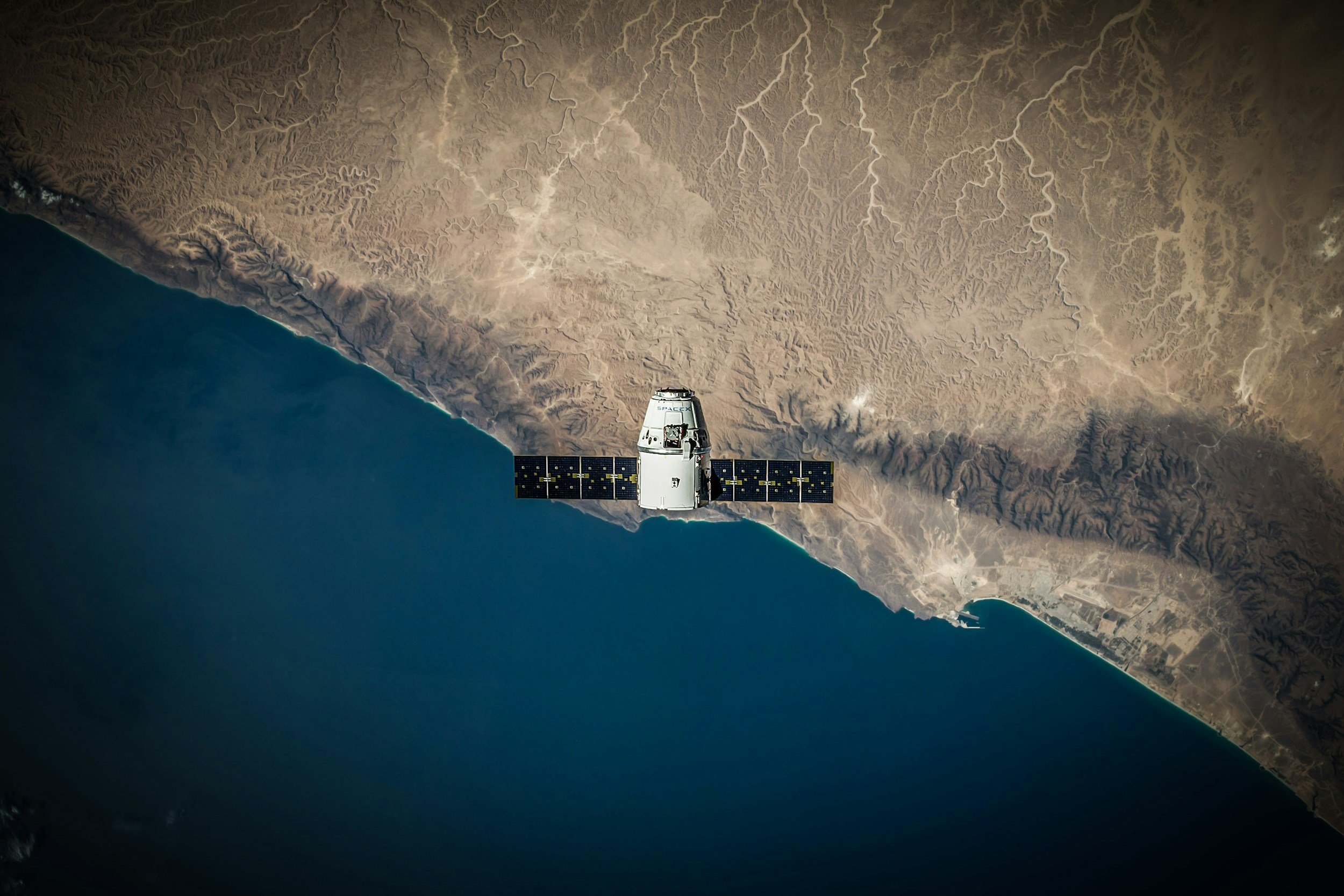
Space Economy 2.0: From Orbit to Opportunity
Space Economy 2.0 represents the transition from space as a government-led, exploration-driven domain to a commercially scaled, infrastructure-enabled economy. While the first phase of the modern space era focused on launch capability and satellite deployment, the next phase is defined by turning orbital assets into continuous economic value on Earth.
This new space economy is built on constellations of low-Earth-orbit satellites, advanced sensors, and space-based data platforms that provide persistent connectivity, Earth observation, navigation, and timing. These capabilities are increasingly integrated with terrestrial networks, cloud platforms, and AI systems, allowing space-derived data to be processed, analyzed, and monetized in near real time. From communications and climate monitoring to defense, logistics, agriculture, and infrastructure resilience, space assets are becoming an operational layer of the global economy.
Space Economy 2.0 matters because it shifts the value proposition from access to space to outcomes enabled by space. Launch costs have fallen, data volumes have exploded, and downstream applications now capture the majority of economic value. As a result, competitive advantage moves toward data fusion, analytics, and integration with existing digital and physical systems.
From orbit to opportunity, Space Economy 2.0 transforms space into a scalable platform for intelligence, connectivity, and resilience, unlocking new markets and redefining how space contributes to economic and strategic power on Earth.